Martin Bucer
Alsatian reformer who bridged Lutheran, Reformed, and Anglican traditions.

Martin Bucer (1491–1551) was an Alsatian Protestant reformer based in Strasbourg who influenced Lutheran and Anglican doctrines and practices as well as Reformed theology. Originally a member of the Dominican Order, he arranged for his monastic vows to be annulled after meeting Martin Luther in 1518. Bucer worked to mediate between Luther and Huldrych Zwingli on the Eucharist and sought agreement on common articles of faith such as the Tetrapolitan Confession and the Wittenberg Concord. He believed Catholics in the Holy Roman Empire could be convinced to join the Reformation, but political events led to the Schmalkaldic War and his eventual exile to England in 1549.
- born
- 11 November 1491
- died
- 28 February 1551
- field
- Theology, Reformation
- nationality
- Alsatian (Holy Roman Empire)
- known_for
- Mediating between Luther and Zwingli; drafting the Tetrapolitan Confession and W
Lore & Background
In 1549, Bucer was exiled to England, where under the guidance of Thomas Cranmer he influenced both Edwardine Ordinals and the second revision of the Book of Common Prayer. He died in Cambridge, England, at the age of 59. Although his ministry did not lead to the formation of a new denomination, many Protestant denominations have claimed him as one of their own. He is remembered as an early pioneer of ecumenism. Bucer's efforts to reform the church in Wissembourg resulted in his excommunication from the Catholic Church, and he was forced to flee to Strasbourg. There he joined a team of reformers including Matthew Zell, Wolfgang Capito, and Caspar Hedio. Later, he worked closely with Philipp Melanchthon on the Wittenberg Concord. In 1548, Bucer was persuaded under duress to sign the Augsburg Interim, which imposed certain forms of Catholic worship, but he continued to promote reforms until the city of Strasbourg accepted the Interim and forced him to leave.
Reader's Guide
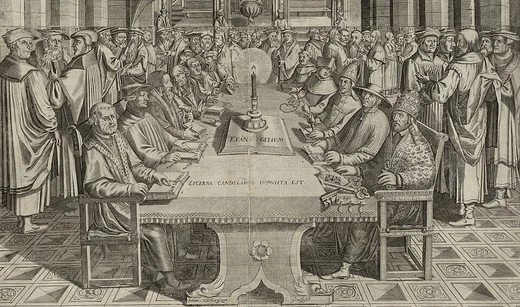
Martin Bucer's significance lies in his persistent efforts to bridge divides within the Reformation and between Protestants and Catholics. As a reformer in the free imperial city of Strasbourg, he navigated the complex political landscape of the Holy Roman Empire, where princely states and city councils often determined the fate of religious change. His work on the Tetrapolitan Confession and the Wittenberg Concord sought common ground among Protestant factions, while his participation in imperial conferences organized by Charles V aimed at uniting Protestants and Catholics to create a German national church separate from Rome. Although these efforts failed due to the Schmalkaldic War and the imposition of the Augsburg Interim, Bucer's legacy endured through his influence on Anglican liturgy via the Book of Common Prayer and the Edwardine Ordinals. His willingness to mediate, even under duress, and his eventual exile to England highlight the precarious position of reformers caught between theological conviction and political reality. Bucer is remembered as an early ecumenist, though his attempts at unity did not prevent the fragmentation of Western Christianity.
Did You Know?
- Bucer was originally a member of the Dominican Order, but after meeting Martin Luther in 1518 he arranged for his monastic vows to be annulled.
- Bucer's efforts to reform the church in Wissembourg resulted in his excommunication from the Catholic Church, forcing him to flee to Strasbourg.
- In 1548, Bucer was persuaded under duress to sign the Augsburg Interim, which imposed certain forms of Catholic worship.
- Bucer died in Cambridge, England, at the age of 59.
- Bucer worked closely with Philipp Melanchthon on the Wittenberg Concord.
Frequently Asked Questions
Who is Martin Bucer?
Martin Bucer (1491–1551) was an Alsatian theologian and reformer based in Strasbourg who spent his career trying to hold together the fractious Protestant movement. Fans of the Reformation often call him the era's great bridge-builder because he worked to reconcile Lutheran, Reformed, and even Catholic positions within the Holy Roman Empire.
What is Martin Bucer most known for?
He is best remembered for mediating the Eucharistic split between Luther and Zwingli, producing landmark documents such as the Tetrapolitan Confession and the Wittenberg Concord. His liturgical and pastoral thinking also left a clear fingerprint on the English Book of Common Prayer during his years of exile in England.
How does Martin Bucer's story end?
Political pressures in the Empire made his Strasbourg position unsustainable, and he was compelled to leave for England in 1549. He died on 28 February 1551, still in his English exile, leaving behind a body of work that continued to shape multiple confessional traditions.
Why is Martin Bucer important to Protestant theology?
Bucer's ecumenical vision meant his ideas seeped into three major streams—Lutheran, Reformed, and Anglican—rather than being confined to a single confession. His insistence on doctrinal unity, practical church order, and pastoral sensitivity made him a distinctive voice in a period usually dominated by sharper polemics.
What is the Tetrapolitan Confession and why did Bucer draft it?
The Tetrapolitan Confession of 1530 was a moderate theological statement Bucer composed to present a unified Protestant face to the Imperial Diet. It deliberately wove together Lutheran and Reformed language on the sacraments so that Protestants could appear as one body rather than a collection of warring factions.
More in Protestant Reformers & Theologians 1-24
Spotted an error? Know more?
This is a living reference — every entry is fact-audited, and reader corrections feed straight into our audit queue. Suggest an edit · See this site's audit record